The Accessories That Actually Make Wedding Guest Dressing Work
Shoes, bags, and belts do the heavy lifting when it comes to polish. Here's how to deploy them across silk slip dresses, linen suits, and everything between.
Why Accessories Matter More Than the Dress
You can wear the same navy silk dress to three different weddings and look entirely different each time. The variable? Your shoes, bag, and belt. While most wedding guest advice fixates on finding the perfect frock, the truth is that wedding guest accessories styling determines whether you look considered or like you grabbed the first thing in your wardrobe. Accessories provide the architecture: they create proportion, introduce texture, and signal whether you understand the assignment (garden party versus black-tie ballroom).
The best-dressed guests know this instinctively. They invest in versatile accessories that work across seasons and dress codes, then let the dress play supporting role.
The Shoe Calculus: Heel Height, Strap Placement, and Terrain
Shoes set the entire silhouette. A block heel reads differently than a stiletto, and both tell different stories than a sleek flat. For daytime weddings, especially outdoor ceremonies, wedding guest accessories styling starts with practical considerations. Aquazzura's block-heel sandals offer stability without sacrificing elegance, while Gianvito Rossi's mid-height pumps provide that sweet spot between comfort and formality.
Consider your hemline when choosing shoes:
- Midi and maxi lengths: A higher vamp or ankle strap prevents the look from dragging. Pointed toes keep it sleek.
- Knee-length dresses: Almost any shoe works, but avoid matching your shoe exactly to your dress colour (it truncates your leg line).
- Cocktail length: Strappy sandals or slingbacks create visual interest where hem meets ankle.
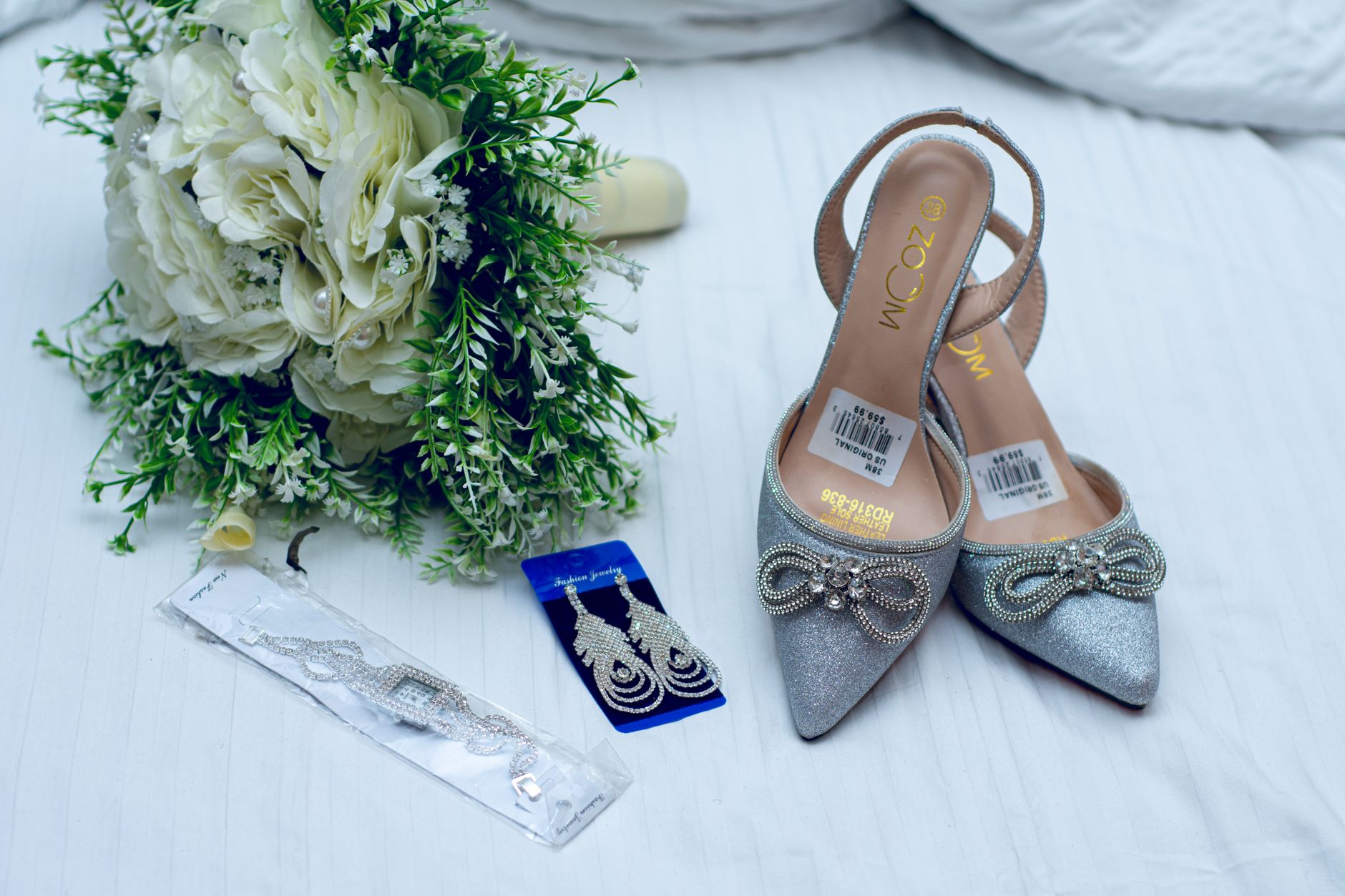
For evening weddings, metallics offer more mileage than you'd expect. A silver or gold sandal works with jewel tones, pastels, and neutrals alike, and you'll wear them long after the confetti settles.
Bags: Small, Structured, and Surprisingly Strategic
Wedding guest bags occupy strange territory. They need to hold your phone, lipstick, and possibly emergency blister plasters, but they shouldn't announce themselves. The ideal size sits somewhere between a minaudière and a crossbody: substantial enough to be functional, compact enough to photograph well.
Bottega Veneta's small Jodie and The Row's Evening clutch represent two approaches to this brief. The former brings tactile intrigue through woven leather; the latter offers quiet discipline. Both work because they're accessories that complement rather than compete with your outfit.
Shape matters as much as size. A structured top-handle bag lends formality to a flowing dress, while a soft pouch keeps a tailored jumpsuit from looking too corporate. If you're wearing a heavily embellished dress, choose a smooth, unadorned bag. Conversely, a simple slip dress benefits from a bag with texture or hardware interest.
One practical note: if the wedding involves multiple locations (ceremony, cocktails, reception), a bag with a chain strap that tucks inside gives you hands-free flexibility without sacrificing elegance.
Belts: The Forgotten Wedding Guest Hero
Belts rarely feature in wedding guest mood boards, which is precisely why they're useful. A well-placed belt transforms proportion and can make a borrowed or older dress feel entirely current.
For wedding guest accessories styling that actually works, consider:
The slim leather belt at the natural waist turns a straight-cut dress into something more defined. This works particularly well with linen or cotton dresses that lack structure.
The statement belt (think embellished, wider styles) can anchor a flowing maxi dress or add visual interest to a monochrome outfit. But deploy sparingly: this only works when the dress itself is simple.
The tonal belt in the same colour family as your dress creates a subtle waist definition without introducing a new colour story. Massimo Dutti and Toteme both offer excellent versions in supple leather.
Skip the belt entirely if your dress has waist detailing, gathering, or a defined silhouette. Belts solve problems; they shouldn't create them.
Putting It Together
The most effective wedding guest accessories styling happens when each piece serves a purpose. Your shoes should suit the terrain and dress length. Your bag should be large enough to be useful but small enough to ignore. Your belt, if you wear one, should clarify your silhouette.
Start with one investment piece (usually shoes or a bag) in a neutral or metallic, then build around it. The goal isn't to match everything perfectly but to create a coherent point of view. That's what separates looking dressed from looking dressed well.


