The Artisan's Canvas: What Makes a Watch Dial Worth Looking At
From sunburst to guilloché, the decorative techniques that separate haute horlogerie from assembly-line anonymity.
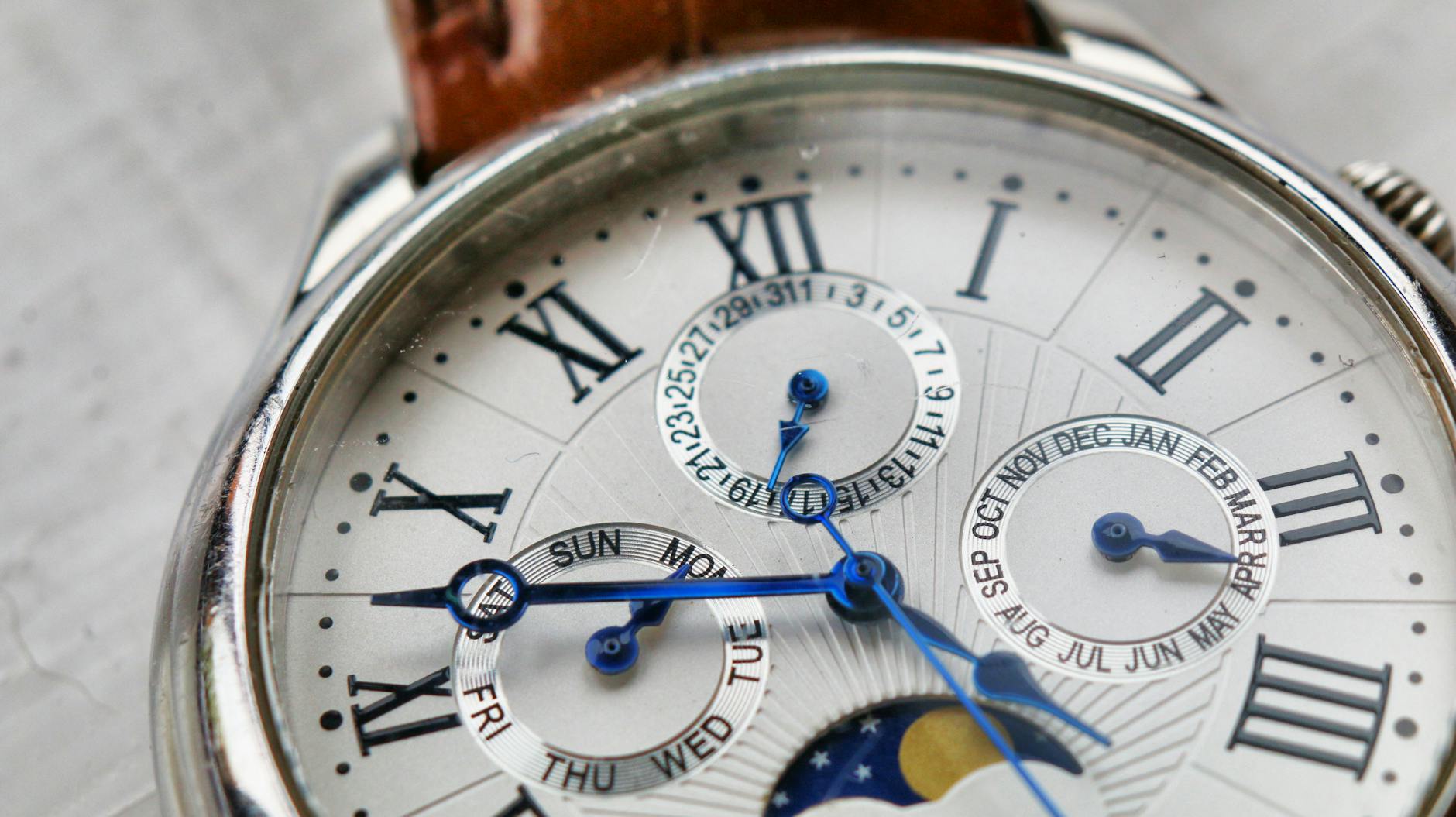
The Surface Tells the Story
A watch dial occupies roughly three square centimetres. Yet within that sliver of real estate, centuries of decorative craft separate the memorable from the forgettable. Watch dial finishing techniques are where horological engineering meets applied art, where function acquires beauty without sacrificing legibility. The difference between a stamped disc and a hand-guilloché surface is the difference between looking at the time and losing yourself in it.
Sunburst: Controlled Radiance
The sunburst finish achieves its signature radial gradient through circular brushing that emanates from the dial's centre. Executed properly on a rose engine lathe or specialized brushing equipment, the technique creates microscopic grooves that catch and refract light differently depending on viewing angle. What appears dark navy at one wrist tilt becomes luminous cobalt at another.
Rolex has deployed sunburst dials across its sport collection for decades, particularly effective on the Oyster Perpetual range where colour becomes the primary design gesture. The brand's mastery lies in consistency: achieving that graduated shimmer across thousands of units without the muddy flatness that plagues cheaper attempts. Omega's recent Seamaster Aqua Terra models demonstrate a more pronounced sunburst effect, with deeper grooves that yield more dramatic light play, suited to the collection's sportier disposition.
The technique demands precision in pressure and speed. Too aggressive, and you get harsh striations. Too timid, and the effect disappears entirely under a crystal.
Guilloché: Geometry in Motion
If sunburst is watch dial finishing techniques at their most accessible, guilloché represents the apex of decorative craft. The process involves engraving repetitive, interlocking patterns into metal using a rose engine lathe, a device that traces geometric forms through a system of cams and gears. Each pattern—clous de Paris (hobnail), vague (wave), panier (basket weave)—requires different cam configurations and hours of manual operation.
Breguet remains the standard-bearer here, having pioneered guilloché in the late 18th century. The maison's Classique collection showcases hand-guilloché dials where patterns shift subtly between sub-registers, each requiring separate tool setups. This isn't merely decorative: the textured surface reduces glare and creates visual hierarchy, guiding the eye across complications.
Contemporary independent watchmakers have revived guilloché as a signature. Voutilainen executes every dial pattern in-house on antique rose engines, resulting in surfaces where depth and dimensionality challenge the thinness of the brass beneath. The labour involved—often 12 to 20 hours per dial—explains both the rarity and the prices.
Beyond the Usual Suspects
Other watch dial finishing techniques extend the decorative vocabulary:
- Grained finishes: Matte textures achieved through sandblasting or chemical treatment, favoured for military-inspired pieces where light reflection must be minimized
- Enamel: Grand feu enamel involves multiple firings at 800°C+, each risking catastrophic failure, yielding surfaces of unmatched depth and permanence
- Meteorite: Sliced Gibeon meteorite reveals Widmanstätten patterns formed over millions of years in space, acid-etched to enhance the crystalline structure
- Aventurine: Glass infused with copper particles creates a starfield effect, used sparingly by brands like Parmigiani Fleurier
- Lacquer: Japanese urushi lacquer applied in dozens of translucent layers, each cured and polished, builds colour saturation impossible through other means
Each technique carries trade-offs. Meteorite dials are fragile and unpredictable. Enamel cracks under impact. Lacquer scratches easily. These vulnerabilities are features, not bugs, reminding the wearer that craft involves risk.
The Economics of Finishing
Machine-applied techniques like sunburst can be executed efficiently without sacrificing quality, making them viable across price segments. Hand-guilloché, conversely, creates a cost floor: below a certain retail threshold, the mathematics simply don't work. This bifurcation explains why watch dial finishing techniques function as reliable indicators of positioning. A €15,000 watch with guilloché likely allocates 8-10% of production cost to the dial alone. A €500 watch cannot.
The secondary market bears this out. Vintage pieces with hand-finished dials command premiums that purely mechanical complications don't always justify. Collectors recognize that certain skills are disappearing, that the number of artisans capable of executing traditional guilloché shrinks annually.
What You're Actually Buying
When watch dial finishing techniques elevate material cost from €50 to €800, you're purchasing time, skill retention, and the willingness to accept failure rates. You're also buying something harder to quantify: the pleasure of noticing new details months into ownership, the way light finds a guilloché groove you hadn't seen before. Surface matters because we spend more time looking at dials than studying movements. The artistry you can see daily justifies itself.


