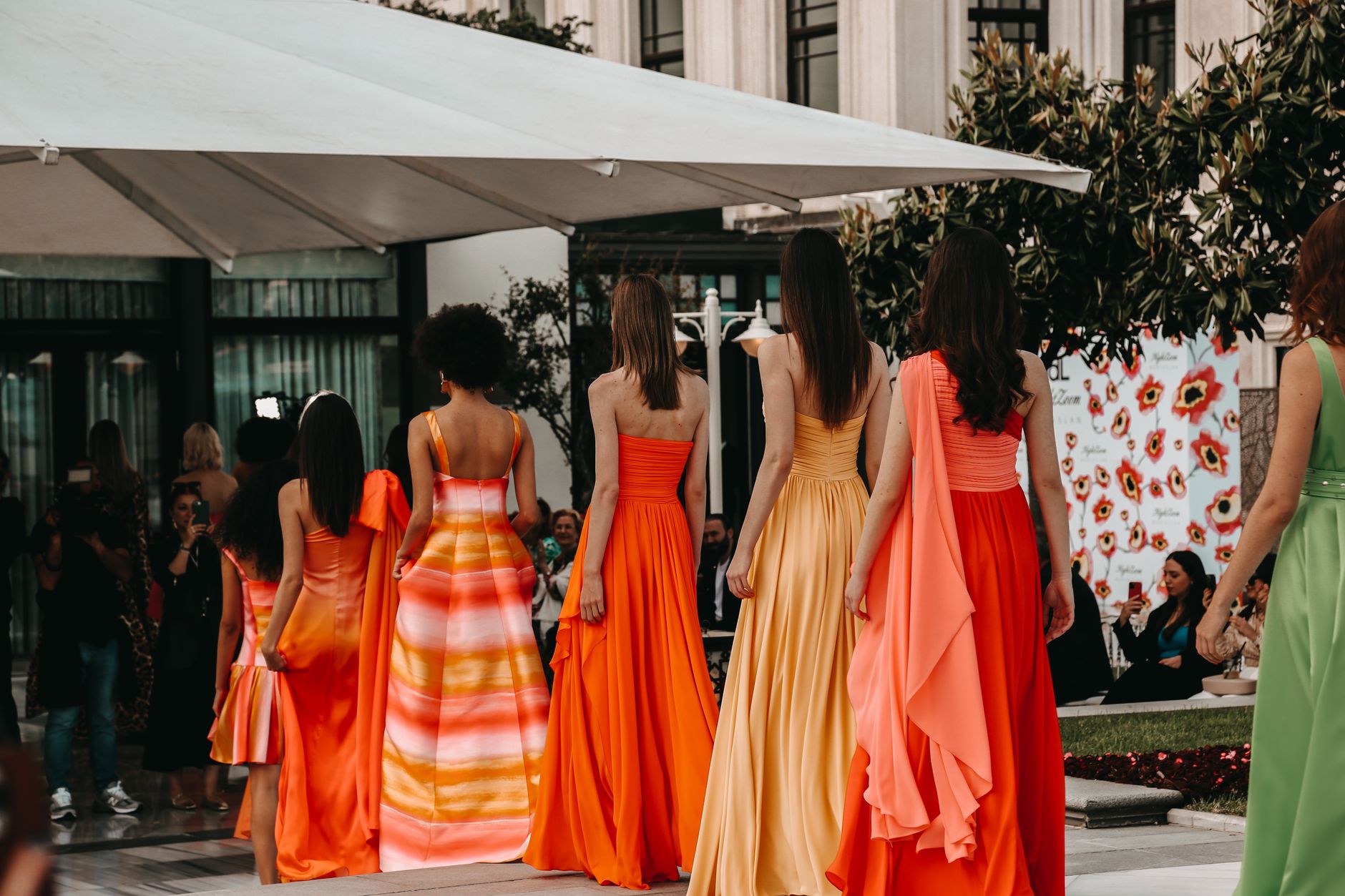
The Maxi Skirt's Return Tells You Everything About Fashion's New Power
From Bottega's liquid column to The Row's architectural sweep, length has become the season's most revealing luxury signal.

The Hemline Speaks Volumes
When Phoebe Philo sent models down the Céline runway in floor-grazing wool skirts in 2013, critics called them frumpy. A decade later, every major house from Milan to Paris is showing variations on the maxi, and suddenly we're all paying attention to what happens below the knee. The difference? Context, cut, and an entirely new understanding of what signals wealth in dress.
The maxi skirt luxury trend isn't simply about reviving a seventies silhouette. It's about recalibrating proportion in an era when quiet luxury has made restraint commercially viable. Where mini hemlines telegraph youth and accessibility, the maxi requires commitment: to fabric volume, to considered styling, to accepting that you won't be running for the Métro. Length has become a luxury in itself.
Silhouette as Seasonal Barometer
What makes this moment particularly interesting is how different houses interpret the same basic premise. The maxi skirt luxury trend manifests differently depending on whether you're looking at spring's fluid iterations or autumn's structured versions.
Spring/Summer brought us:
- Bottega Veneta's bias-cut silk skirts that pool at the ankle, requiring the wearer to move deliberately (read: expensively)
- Lightweight cotton voile from Lemaire, volume without weight
- Pleated technical fabrics at Issey Miyake that somehow look both ancient and futuristic
- Sheer overlays at Chloé, where the maxi length paradoxically reveals more leg than it conceals
Come Autumn/Winter, the same silhouette hardens into something more architectural. The Row's double-face cashmere versions feel less like skirts and more like wearable sculpture. Jil Sander showed wool-crepe maxis with invisible pockets, the kind of practical luxury that only makes sense at a certain price point. These aren't garments you throw on; they're pieces you build an entire look around.
The seasonal shift tells us something crucial: the maxi skirt luxury trend adapts to fabrication more than most silhouettes. A midi can look roughly similar in silk or denim. A maxi in different materials becomes an entirely different proposition.
Why Length Matters Now
Timing explains everything. The maxi's resurgence coincides with several converging factors that have little to do with nostalgia and everything to do with contemporary luxury's identity crisis.
First, there's the fabric question. A well-cut maxi requires significantly more material than its shorter cousins. At a time when supply chain transparency and material costs are under scrutiny, choosing to use three meters of cashmere instead of one becomes a statement. Khaite's ribbed-knit maxi skirts, for instance, use enough fine-gauge merino to make two standard sweaters. That's not excess; it's emphasis.
Second, the styling complexity. Maxi skirts demand careful shoe selection (the wrong heel height kills the line), considered top proportions (too voluminous and you're drowning; too fitted and you're a cartoon), and an awareness of how fabric moves when you sit, walk, or climb stairs. This isn't dressing for Instagram; it's dressing for real life, which paradoxically makes it more aspirational.
Third, the anti-trend positioning. While micro-minis cycle through TikTok at lightning speed, the maxi skirt luxury trend operates on a different temporal plane. These are pieces designed to last multiple seasons, to be worn repeatedly without feeling dated. In an industry finally reckoning with overproduction, longevity has become its own form of status.
The Cut Underneath the Cloth
What separates a luxury maxi from its high-street interpretation isn't just fiber content. It's construction: the hidden weights sewn into hems so skirts hang properly, the bias cutting that prevents twisting, the invisible zippers that lie completely flat. Loro Piana's silk maxis, for example, feature interior silk-organza underlays that prevent the outer fabric from clinging. You'd never see it, but you'd certainly feel its absence.
The best versions also account for proportion in unexpected ways. Notice how many designer maxis sit slightly lower on the waist than you'd expect? That drop of two or three centimeters changes everything about how the body reads underneath. It's the kind of detail you can only appreciate in person, which makes it particularly valuable in an increasingly digital retail landscape.
Where We Go From Here
The maxi skirt luxury trend shows no signs of contracting. If anything, we're seeing it expand into adjacent categories: maxi shorts (yes, really) at Loewe, maxi-length sarongs at Hermès, even evening interpretations in duchesse satin at Valentino. Length is having its moment precisely because it offers something increasingly rare: a silhouette that can't be reduced to a single viral image. You have to see it move. Better yet, you have to wear it.
And perhaps that's the real luxury: clothing that reveals itself slowly, that rewards the wearer more than the observer, that asks for patience in an impatient age.