The Occasion Dressing Guide for Gallery Openings, Galas, and Dinners
How to dress for high-society calendar staples without overthinking it or looking like you're trying too hard.
The Gallery Opening: Art World Pragmatism
Gallery openings demand a particular calibre of dressing: you need to look considered without competing with the art on the walls. The crowd skews creative, moneyed, and allergic to anything too literal. This is not the moment for your gala gown.
Think tailored trousers in an interesting fabrication (The Row's wide-leg wool or Lemaire's Japanese denim work beautifully here) paired with a structured knit or silk shirt. Toteme has perfected this formula with their minimal shirting that manages to feel both austere and sensual. Add a blazer if the venue runs cold, but make it architectural rather than corporate. Bottega Veneta's leather pieces or Khaite's cashmere iterations strike the right note.
Footwear should be walkable. You'll be standing on concrete for two hours minimum, wine glass in hand. A block-heeled boot or a streamlined loafer keeps you grounded in both senses. If you're reaching for jewellery, go sculptural and singular rather than a full suite.
Key considerations:
- Black works, but charcoal, chocolate, or navy feels less uniform
- Avoid anything too precious or delicate around red wine and canapés
- A good bag matters here since you'll likely be carrying a catalogue
- Outerwear counts (you'll wear it inside while circulating)
The Gala: Controlled Opulence
Galas are the rare occasion where formality is not only expected but required. This is where your occasion dressing guide becomes most traditional, though that doesn't mean predictable. The dress code will usually specify black tie or creative black tie, and you should honour it.
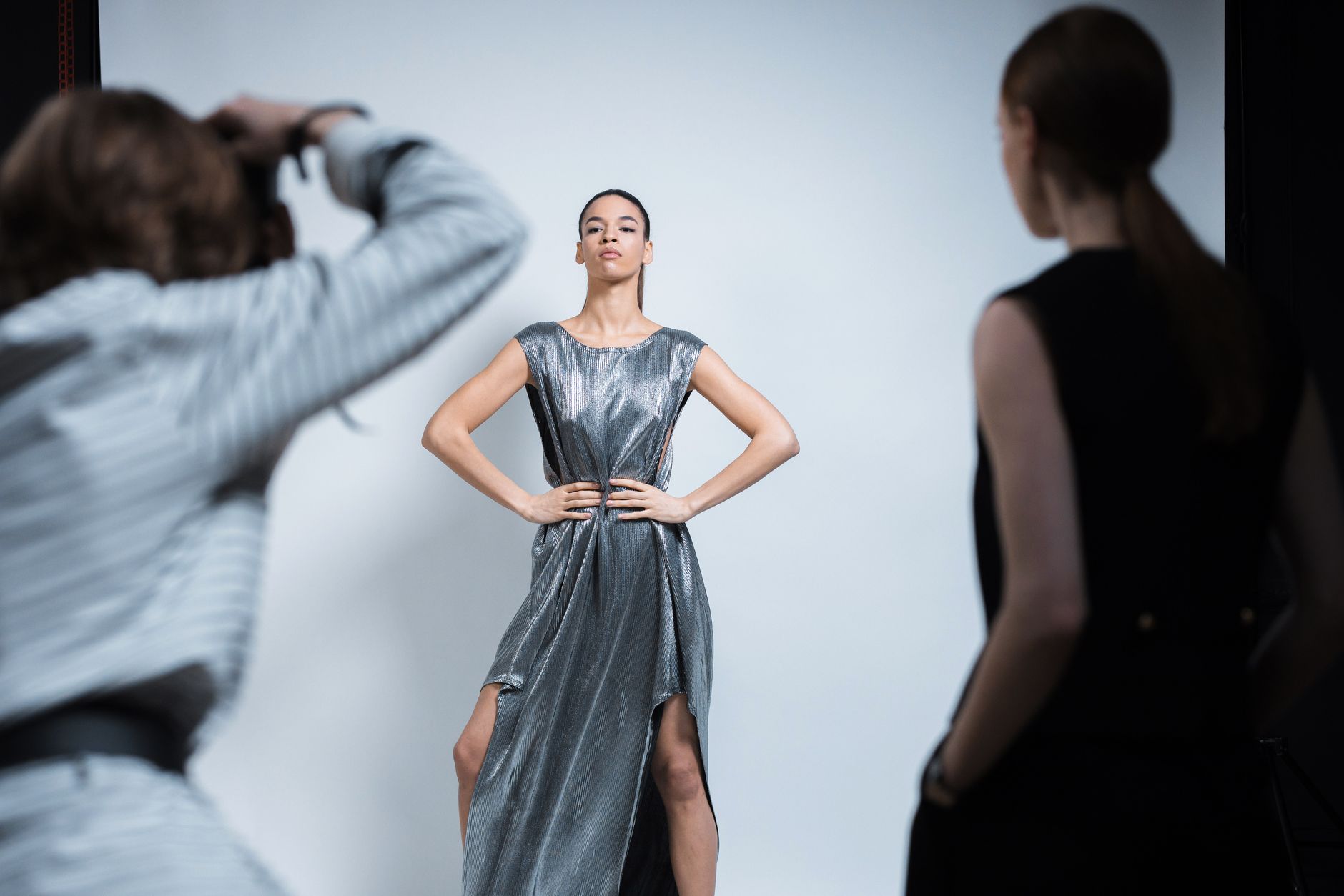
For women, this means floor-length or a very deliberate midi length in a luxe fabric. Silk faille, duchess satin, or a substantial crepe all photograph well under ballroom lighting. The Vampires Wife has built a cult following precisely because their velvet gowns understand gala lighting and movement. Colour is welcome, but consider the venue. A gilded hotel ballroom can make certain jewel tones look muddy.
Men have less obvious room for interpretation, but the details matter enormously. A peak lapel reads more formal than notch. Grosgrain facings signal you understand the assignment. If you're going velvet (Saint Laurent does an excellent smoking jacket), make sure the rest of your outfit stays classic. Patent shoes, proper studs, and a silk bow tie you've tied yourself.
The gala checklist:
- Consider the photography (you will be photographed)
- Break in your shoes beforehand
- Bring or wear a proper coat, not your everyday puffer
- Jewellery should be either very good or very quiet
The Dinner: Refined Informality
Private dinners occupy the trickiest territory in any occasion dressing guide. Too formal and you'll look like you've misread the room; too casual and you've insulted your host. The calibration depends entirely on context: is this a Mayfair townhouse or a Shoreditch loft? A Parisian apartment or a Tribeca penthouse?
The safest framework is elevated separates. For women, this might be a silk skirt (Jil Sander's bias-cut styles are reliably chic) with a fine-gauge knit, or tailored trousers with a beautiful blouse. Khaite and Gabriela Hearst both excel at pieces that feel special without announcing themselves. Add a blazer or cardigan coat you can remove once seated.
Men should think along similar lines: trousers with intention (corduroy, flannel, or a textured wool), a proper shirt, and a knit or jacket that can be shed. Brunello Cucinelli has made a fortune from this exact formula. Loafers or minimal leather sneakers work depending on your host's sensibility.
Texture and fabrication do the heavy lifting here. Cashmere, silk, fine wool, and supple leather all signal you've made an effort without looking costumed. Save the sequins for the gala.
The Through Line
What connects all three scenarios is intentionality. Each requires you to read the room before you enter it, to dress for the occasion's specific demands rather than a generic notion of "dressing up." The gallery wants mobility and edge. The gala demands formality and presence. The dinner requires warmth and discretion.
Your wardrobe should contain pieces that can move between these contexts with minor adjustments. That's not versatility for its own sake but rather the kind of considered dressing that makes getting dressed feel less like a puzzle and more like a conversation you're fluent in.


