The Quiet Power of Monocolor Dressing This Winter
Why the most compelling luxury wardrobes right now speak in single shades—and how to master tonal dressing without looking flat.

The Case for Committing to One Shade
Monocolor luxury styling has moved beyond minimalist uniform into something more nuanced: a way of dressing that whispers rather than shouts, yet commands attention through sheer consistency of vision. When Phoebe Philo was at Céline, her tonal camel and grey looks proved that restriction breeds creativity. This winter, the approach feels particularly relevant as wardrobes contract and the appeal of a considered, cohesive silhouette grows stronger.
The challenge, of course, is avoiding the dreaded monotony. A head-to-toe beige look can read as elegantly restrained or utterly forgettable, depending entirely on how you build it. The difference lies in understanding texture, proportion, and the subtle gradations within what we lazily call "one color."
Texture Is Your Greatest Ally
The first rule of monocolor luxury styling: never let surfaces agree too easily. A charcoal grey cashmere rollneck worn with grey flannel trousers and a grey wool overcoat will flatten you visually, no matter how expensive each piece. Instead, think about pairing that cashmere with brushed mohair, pressed wool, and perhaps a silk-lined coat. Suddenly, light hits each fabric differently. The eye travels.
Consider The Row's approach to winter whites and creams. Their collections routinely pair matte cotton poplin with glossy leather, felted wool with ribbed knits, creating visual interest through surface variation alone. Brunello Cucinelli does similar work in their tonal beige and taupe pieces, often mixing suede, cashmere, and woven linen within a single outfit.
For practical application:
- Matte against shine: wool trousers with patent leather loafers, or a matte silk blouse under a polished leather blazer
- Smooth against textured: sleek merino knits with bouclé outerwear, or fine-gauge cashmere with chunky cable knits
- Structured against fluid: crisp shirting beneath soft, unstructured coats
- Woven against knit: cotton drill trousers with chunked knit cardigans
Playing with Proportion and Weight
The second consideration is silhouette variation. Monocolor dressing amplifies proportion because there are no color breaks to distract the eye. This can work beautifully in your favor if you're deliberate about it.
Think about weight distribution. A voluminous ivory cashmere sweater tucked loosely into narrow cream trousers creates a different visual rhythm than the reverse. Oversized tailoring in charcoal grey looks entirely different when worn with slim-cut trousers versus wide-leg versions in the same shade. Lemaire excels at this kind of tonal proportion play, often showing looks where every piece is within two shades of each other but the silhouette creates all the drama.
Length matters too. A long coat in the same navy as your trousers creates an unbroken vertical line, while a cropped jacket in that navy introduces a break point. Neither is inherently better, but understanding the effect lets you control how your body reads in space.
The Art of Tonal Variation
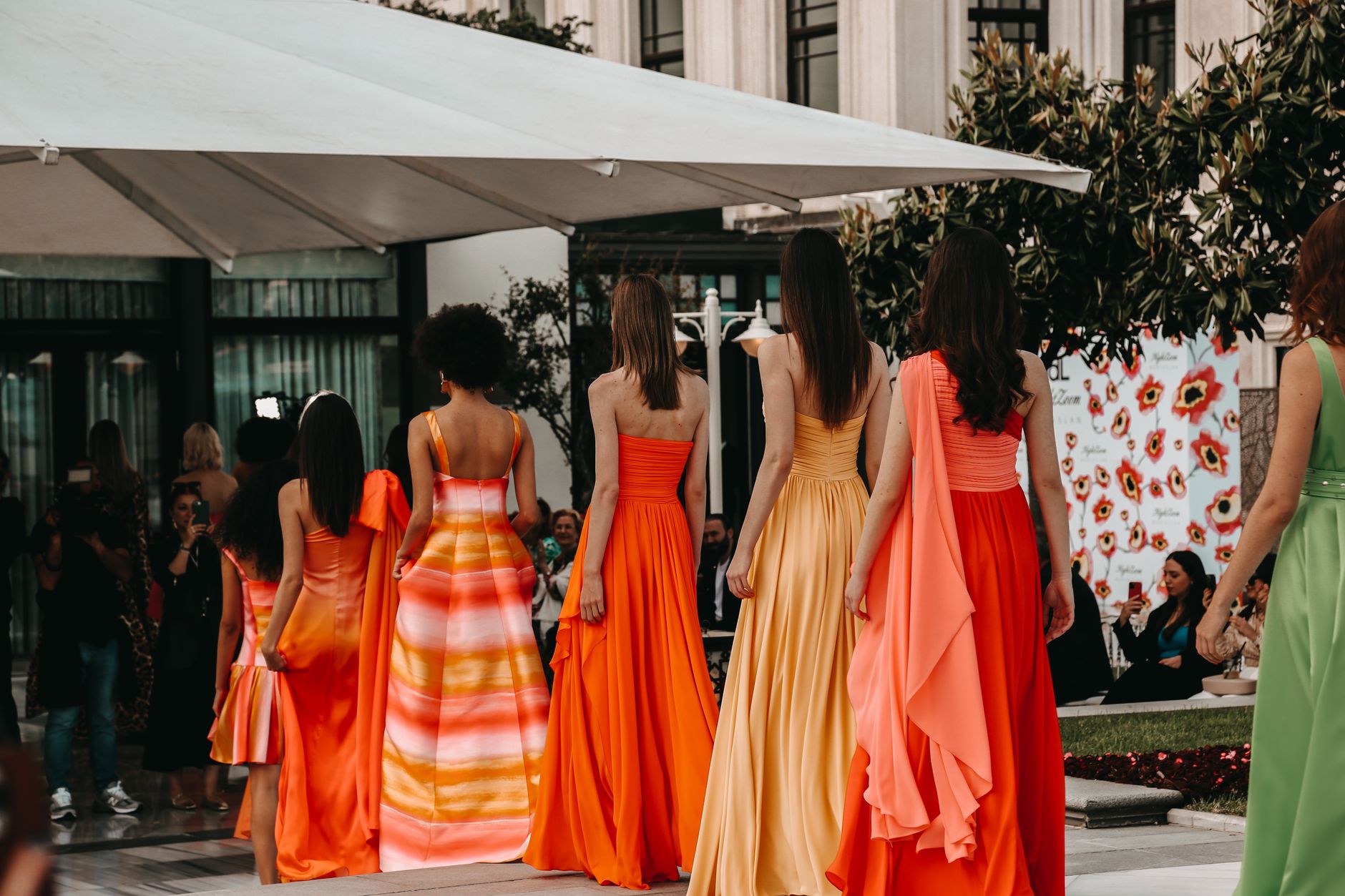
Here's where monocolor luxury styling gets interesting: true monochrome is actually multiple shades working in harmony. What we call "all black" in practice might be ink black trousers, charcoal knitwear, and a faded black coat. The slight variations create depth.
This is particularly effective in neutrals. An "all beige" look might span from ecru to camel to taupe, creating a gradient effect that's far more sophisticated than exact matching. Loro Piana's winter collections demonstrate this beautifully, often showing five or six variations of camel and vicuña tones in a single look.
Don't fear slight mismatches in blacks, navies, or greys. In natural light, these variations read as intentional depth rather than failed coordination, provided the textures and proportions are working together.
Anchoring with Accessories
Finally, accessories in tonal dressing should either disappear completely or provide subtle punctuation. A cognac leather belt and shoes with a camel look creates gentle definition without breaking the monochrome spell. Gold jewelry with winter whites adds warmth. Silver with greys reinforces the coolness.
The bag matters most. A structured leather piece in your chosen shade—say, a burgundy top-handle with an all-burgundy outfit—provides visual weight and grounds the look. Alternatively, keeping it tonal but in a contrasting texture (suede bag with wool clothing, for instance) maintains coherence while adding that crucial surface variation.
Monocolor luxury styling ultimately rewards patience and a willingness to build slowly. It's not about buying a matching set, but about accumulating pieces in your chosen palette that speak to each other through quality, cut, and considered detail. The payoff is a wardrobe that feels both expansive and remarkably easy to dress from each morning.