The Three Tribes of Maximalism: Where Do You Actually Stand?
Logo bombardment, tactile overload, or chromatic chaos. Maximalism has splintered into distinct camps, and luxury brands are choosing sides.

The Schism
Maximalism isn't monolithic anymore. What began as a catchall rejection of quiet luxury has fractured into three distinct tribes, each with its own codes, champions, and Instagram aesthetics. Understanding these maximalism micro-trends matters because they require fundamentally different wardrobes, different styling instincts, and wildly different bank balances. Logo bags demand brand literacy. Texture play needs an eye for craft. Color clash requires genuine nerve.
Logo Bags: The Legibility Wars
This is maximalism at its most declarative. The Balenciaga Le Cagole with its mirrored monogram studs. Gucci's GG Marmont in oversized quilted iterations. Fendi's Baguette drowning in FF logos rendered in sequins, crystals, or contrast stitching. These aren't bags that whisper; they're designed to be read from across the street.
The appeal is part nostalgia (early 2000s logomania never really died, it just went into witness protection), part defiance. In an era when Loro Piana totes became the uniform of stealth wealth, logo maximalism reads as refreshingly unapologetic. You're not pretending you didn't spend money. You're celebrating it.
But there's nuance here. Versace's Medusa hardware feels different from Chanel's interlocking Cs blown up to handbag-strap proportions. The former is mythological theatre; the latter is heritage flex. Both sit within the same maximalism micro-trends universe, but they're speaking different dialects.
The styling mandate: Treat the bag as the outfit's anchor. Everything else should recede, or at least know its place. Black tailoring, denim, monochrome knits. Let the logo do the talking.
Texture Play: The Artisan's Answer
If logo bags are about being seen, texture maximalism is about being felt. This is where craft becomes theatre. Think Bottega Veneta's padded intrecciato leather that looks like it's been inflated. Loewe's basket bags with their woven complexity. Simone Rocha's pieces layered in tulle, lace, ruffles, and embroidered organza until they approach sculptural status.
This branch of maximalism requires proximity. It doesn't photograph the same way logos do, which is precisely the point. It's a rebuke to the flattening effect of digital culture. You have to see the hand-stitching on a Dries Van Noten coat, feel the weight of a heavily beaded Prada cardigan, watch how light moves through layered silk.
The brands excelling here tend to have atelier histories or craft-forward identities:
- Loewe under Jonathan Anderson: leather manipulation that borders on architectural
- Bottega Veneta: intrecciato taken to baroque extremes
- Simone Rocha: Victorian excess filtered through contemporary proportion
- Comme des Garçons: fabric experimentation as conceptual statement
Texture maximalism is harder to pull off because it demands consideration of weight, drape, and volume. Pile on too many fabrications and you risk looking upholstered. But when it works, it's deeply satisfying in a way that logo bags can never quite achieve.
Color Clash: The Brave and the Reckless
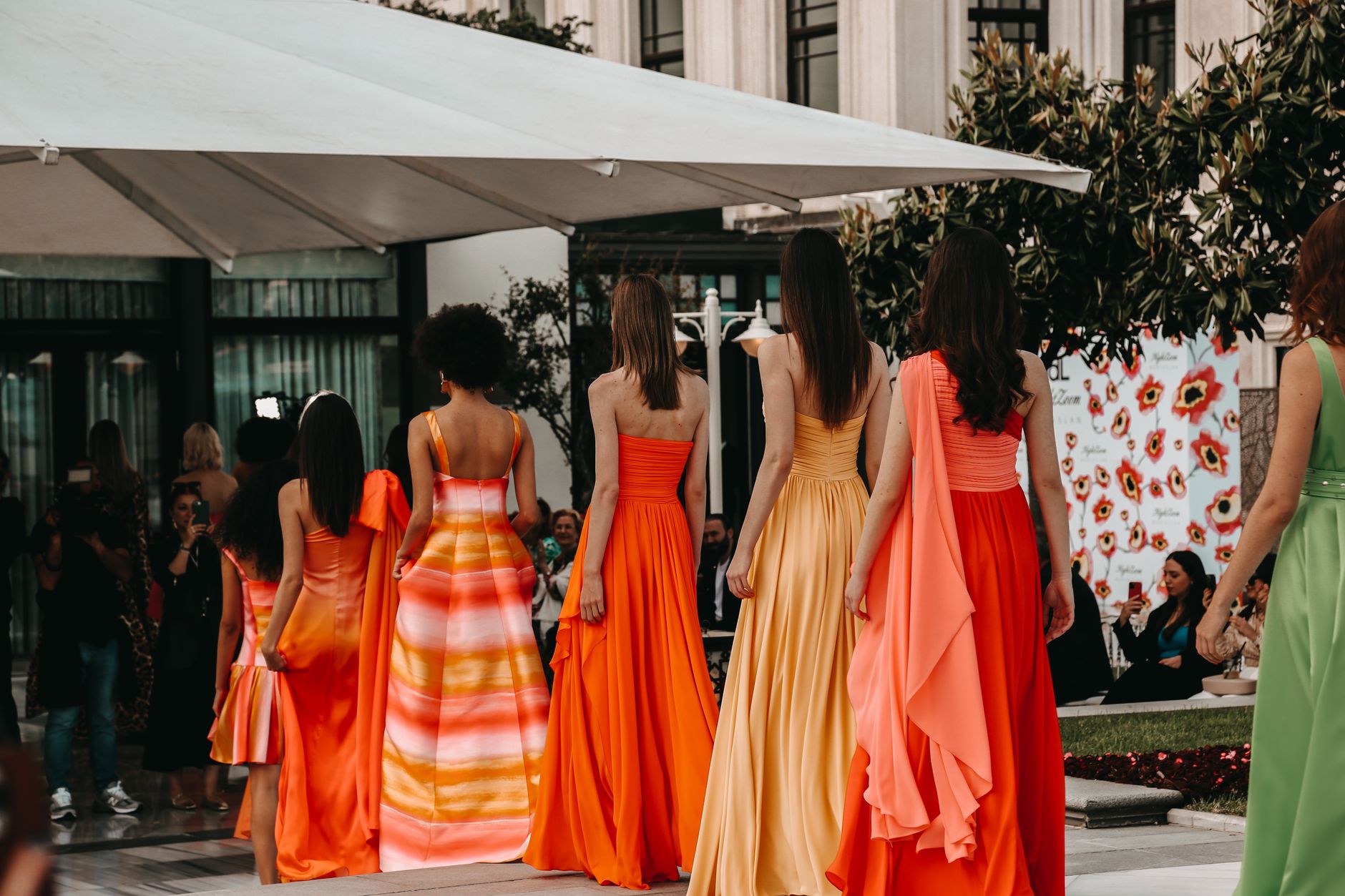
This is where maximalism micro-trends get genuinely risky. Not just color blocking (that's been tame since the 1980s), but active chromatic warfare. Fuchsia with orange with electric blue. Marni's painterly prints layered over clashing knits. Valentino's PP Pink era, which dared you to wear hot pink from head to toe and mean it.
Color maximalism is about rejecting the tyranny of tonal dressing. It's the opposite of the beige-on-beige-on-camel uniform that dominated the late 2010s. But it requires genuine confidence because there's nowhere to hide. A badly chosen color combination doesn't just fail quietly; it fails loudly.
Prada's SS23 collection offered a masterclass: acid greens against deep burgundies, sky blue with burnt orange, all rendered in clean silhouettes that let the color do the heavy lifting. Marni continues to champion this approach with its signature naive prints and unexpected color pairings that shouldn't work but somehow do.
The trick is commitment. Half-hearted color clashing reads as accidental. You need to look like you meant it.
Where the Tribes Converge
The reality is that these maximalism micro-trends aren't mutually exclusive. Gucci under Sabato De Sarno might lean textural, but there's still logo play. Balenciaga does color and logo simultaneously. The most interesting maximalists are the ones who understand the grammar of all three and choose deliberately.
What matters is knowing which language you're speaking at any given moment. Because maximalism, for all its apparent chaos, still has rules. You're just choosing which ones to follow.