Three Japanese Tailoring Houses Quietly Reshaping Menswear
From Osaka's experimental cutting rooms to Tokyo's heritage workshops, a new generation of ateliers is proving that innovation and tradition aren't mutually exclusive.
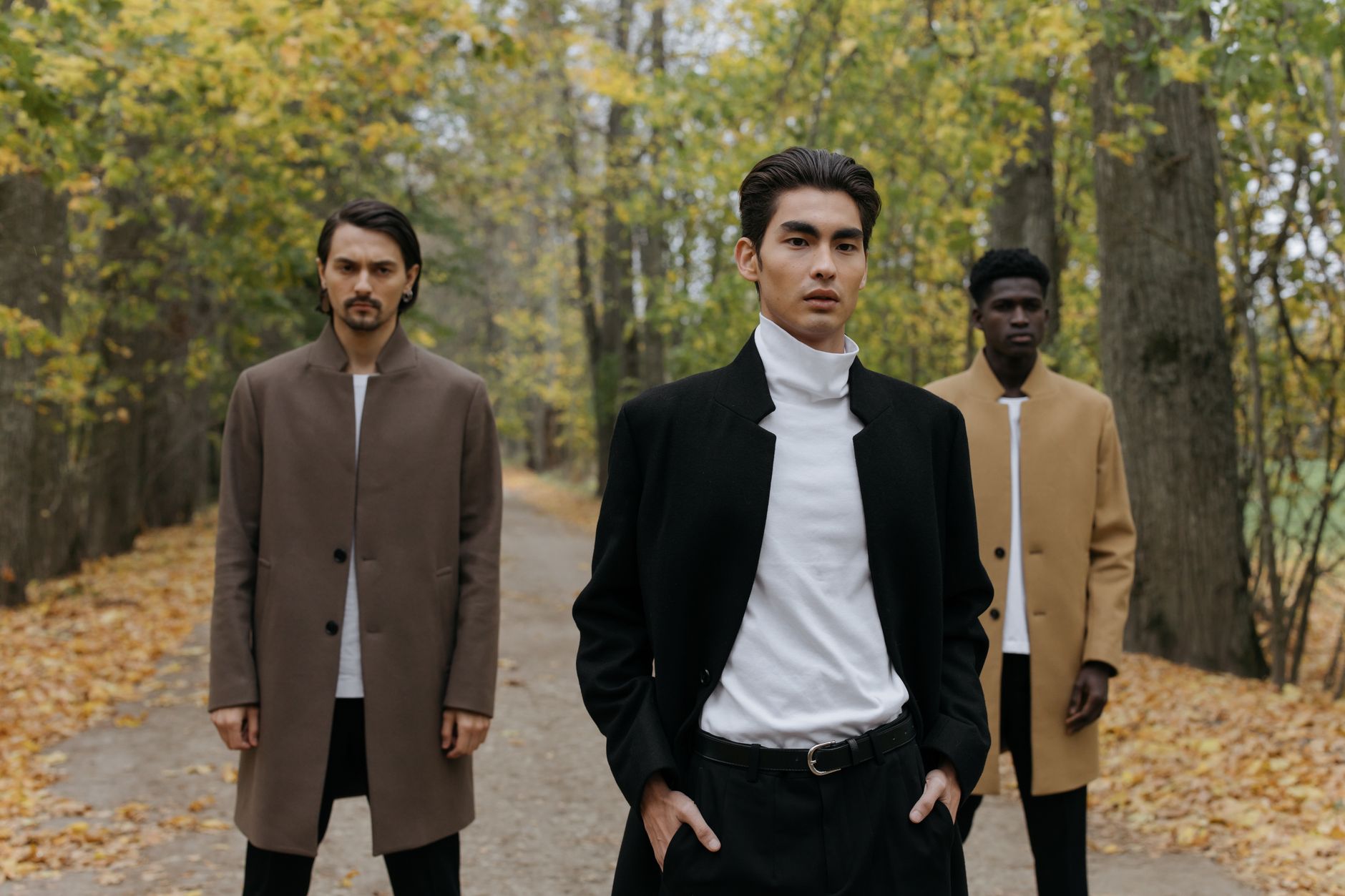
The New Guard
While Savile Row debates lapel widths and Neapolitan workshops perfect their spalla camicia, a cluster of Japanese tailoring brands has been busy rewriting the rulebook entirely. These aren't the usual suspects trotting out "East meets West" clichés. Instead, they're synthesizing centuries of kimono construction, postwar American workwear, and rigorous technical experimentation into something genuinely distinct.
Ring Jacket: The Osaka Technicians
Founded in 1954, Ring Jacket operates from Osaka with the precision of a Swiss watchmaker and the curiosity of a research lab. Their signature lies in the marriage of soft Neapolitan shoulder construction with Japanese pattern-making, which tends toward a cleaner, more architectural silhouette than its Mediterranean counterpart.
What sets them apart is their willingness to deconstruct. While traditional tailoring adds structure through canvas and padding, Ring Jacket's contemporary line explores how little reinforcement a jacket actually needs. The result feels like wearing a well-cut shirt that happens to have lapels. Their model 184 jacket, with its minimal shoulder padding and high armhole, has become something of a cult piece among those who find British tailoring too stiff and Italian too loose.
The brand also maintains an impressive archive of vintage American sportswear, which informs their approach to casual tailoring. You'll see this in details: patch pockets with a subtle belly, trouser waistbands that sit just so, shirt collars that roll rather than stand at attention.
Sartoria Cifonelli Tokyo: Heritage Meets Precision
When the storied Parisian house Cifonelli opened its Tokyo atelier, it wasn't mere brand expansion. The Japanese operation, while respectful of its French DNA, has evolved its own vocabulary. Sartoria Cifonelli Tokyo applies Japanese manufacturing discipline to French elegance, resulting in garments where every stitch serves a purpose.
Their approach to fitting is particularly noteworthy. Where Western tailors might aim for a certain drape or silhouette first, the Tokyo team starts with mobility and comfort, then sculpts the aesthetic around those fundamentals. It's a subtle philosophical shift, but you feel it immediately when you move. Jackets track with your body rather than constraining it.
The house specializes in:
- Ultra-lightweight construction suitable for Tokyo's humid summers without sacrificing structure
- Hybrid garments that function in both business and casual contexts
- Precise dart placement that accommodates Asian body types often underserved by European patterns
- Innovative fabric sourcing from lesser-known Japanese mills
Camoshita United Arrows: The Pragmatist Poets
If Ring Jacket represents technical innovation and Cifonelli Tokyo embodies cross-cultural synthesis, then Camoshita United Arrows is where Japanese tailoring brands meet real-world pragmatism. Designer Yasuto Kamoshita worked at Beams before launching this line, and that retail experience shows.
Camoshita makes clothing for men who think about style but don't want to think about their clothes all day. The cuts are forgiving without being sloppy. The fabrics are beautiful but durable. A Camoshita suit works equally well for a gallery opening or a long dinner that turns into drinks that turns into a walk home at 2 AM.
What's particularly clever is their use of Solaro and other traditionally summer-weight fabrics in three-season garments. The weaves are tight enough for structure but breathable enough for comfort. They've also mastered the blazer that looks sharp over a T-shirt, which is harder than it sounds. The trick lies in keeping the lapels soft and the quarters short, so the jacket doesn't overwhelm casual underpinnings.
Why It Matters Now
These Japanese tailoring brands aren't operating in opposition to Western tradition so much as in conversation with it. They've studied the masters, absorbed the principles, then asked: what if we started from different assumptions about how bodies move, how fabric behaves in humidity, how a modern wardrobe actually functions?
The answers they've arrived at feel increasingly relevant as menswear sheds its formality without abandoning sophistication. These are clothes for a world where a "dressed up" occasion might mean jeans with a beautiful jacket, where comfort isn't the opposite of elegance but its precondition.
Tokyo, Osaka, and their surrounding ateliers have become laboratories for what tailoring can be when it's unmoored from century-old European conventions. The experiments are worth watching.


