The Art of Candle Fragrance Layering: Building Olfactory Architecture
Move beyond single-note simplicity. Here's how to compose sophisticated scent environments by combining complementary candles throughout your space.
Perfumers spend years learning to balance top, heart, and base notes—so why should your home settle for one-dimensional fragrance?
Why Layer Candles Instead of Burning Just One
The principle behind candle fragrance layering is borrowed directly from haute parfumerie: complexity creates intrigue. A single candle, no matter how beautifully composed, fills a room with uniform scent. Layer two or three thoughtfully chosen flames across different surfaces, and you build olfactory architecture—zones of intensity, pockets of surprise, a narrative that unfolds as you move through the space.
This isn't about overpowering a room or masking anything. It's about the same kind of intentionality you'd apply to choosing a sofa fabric or hanging art. Scent shapes how we experience interiors, and layering gives you control over that dimension.
The Ground Rules for Successful Candle Fragrance Layering
Start with complementary rather than identical notes. Think about how ingredients naturally coexist: woody and resinous (cedarwood with frankincense), floral and green (jasmine with vetiver), citrus and herbal (bergamot with basil). Avoid combining fragrances that compete for attention—tuberose and oud in the same room will wage war, not harmony.
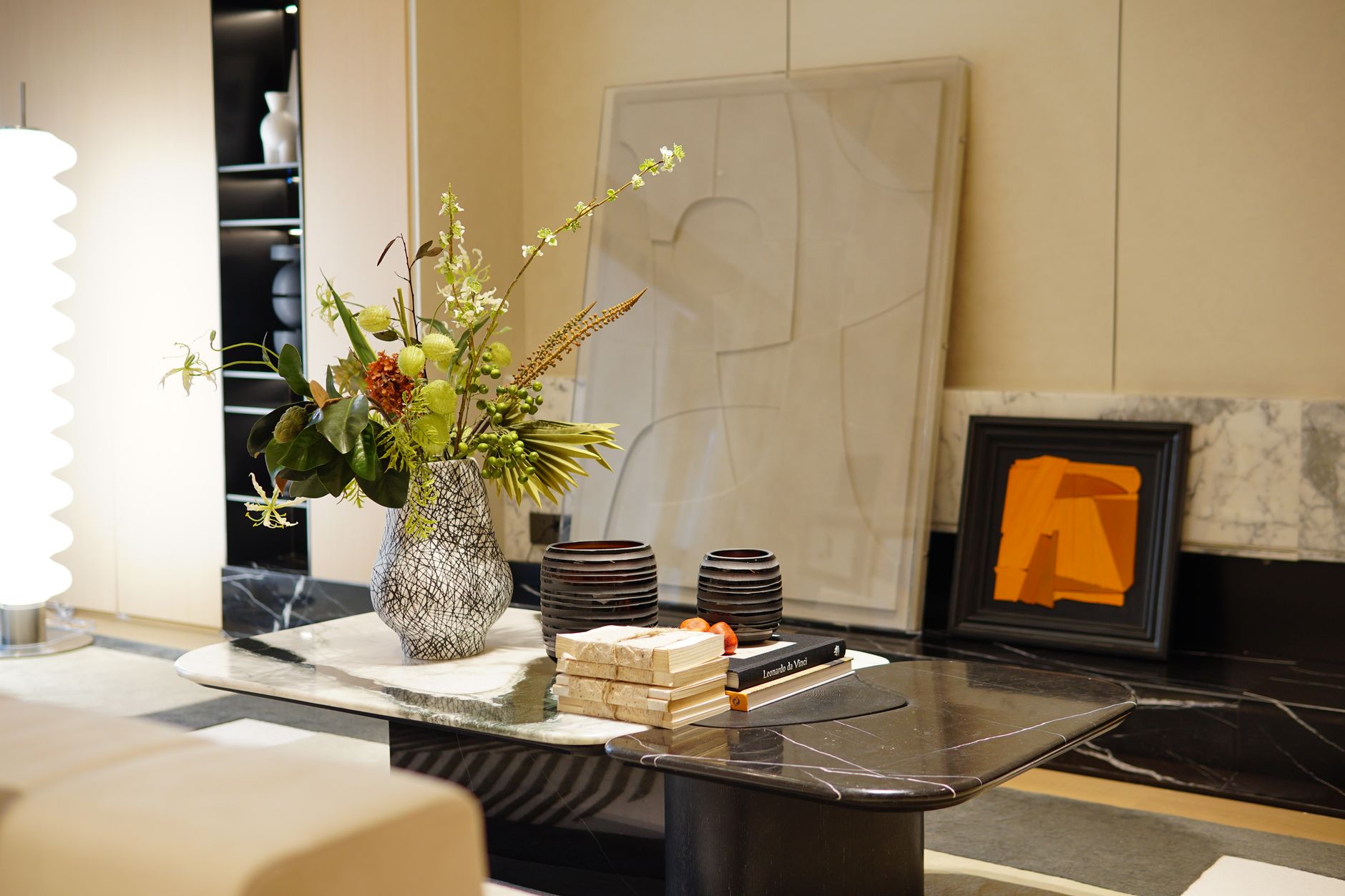
Physical placement matters as much as scent selection. Lighter, more volatile notes (citrus, herbs, aldehydes) rise and dissipate quickly, so position those candles higher—on mantels or shelving. Heavier base notes (amber, patchouli, sandalwood) have more staying power and work well on coffee tables or sideboards where they can anchor the composition.
Timing is your third variable. If you're layering three candles, don't light them simultaneously. Start with your base note fifteen minutes before guests arrive, add your heart note ten minutes later, then introduce your top note just as people walk in. This creates the same kind of development you'd experience in a well-structured fragrance.
Three Foolproof Candle Fragrance Layering Combinations
If you're new to this, begin with these proven pairings:
- Woody + Spiced Citrus: A cedarwood or sandalwood candle grounds the room, while a separate candle with bergamot and cardamom adds brightness without sweetness. This works particularly well in studies or dining rooms.
- Floral + Herbaceous: Pair a white floral (gardenia, tuberose, or neroli) with something green and slightly bitter—tomato leaf, fig, or sage. The herbal element prevents the floral from reading as cloying.
- Resinous + Smoky Leather: Frankincense or myrrh layered with a tobacco or birch tar candle creates the kind of enveloping warmth that makes winter evenings feel like an event.
Diptyque's Feu de Bois works beautifully as a base layer—it's smoky without being heavy, and plays well with nearly anything you place above it. Cire Trudon's Abd El Kader, with its mint and tea notes, functions as an excellent palate cleanser when you want to add brightness to richer compositions.
What Not to Do
Resist the urge to layer more than three candles in a single room. Beyond that, you're creating olfactory noise rather than architecture. Similarly, avoid pairing gourmand scents (vanilla, caramel, praline) with anything green or marine—the contrast reads as confusion rather than counterpoint.
Don't assume expensive candles layer better than accessible ones. What matters is the quality of the fragrance composition and how notes interact in your specific space. A well-chosen high street candle can complement a luxury flame more successfully than two prestigious candles with clashing personalities.
Finally, trust your nose over any formula. Candle fragrance layering is subjective, and how scents combine depends on room size, airflow, humidity, even your home's existing smell (wood floors, plaster walls, and textiles all absorb and release fragrance differently). What works in a Haussmann apartment may overwhelm a loft.
Living With Layered Scent
Once you've established combinations you love, treat them like a wardrobe: rotate seasonally, adjust for occasion, edit ruthlessly. The goal isn't to make every room smell like a niche perfumery, but to add another layer of intention to how you inhabit space.
Burn your candles long enough for the wax pool to reach the edges—usually two to three hours—and trim wicks to a quarter inch between uses. This isn't fussiness; it's how you preserve the integrity of each fragrance so your carefully constructed layers don't devolve into sooty chaos.