The Trench Coat Is the Only Layer a Traveler Really Needs
From Burberry's gabardine prototype to The Row's minimalist reimagining, why this wartime staple remains the smartest piece in any suitcase.

A Military Secret That Became a Wardrobe Essential
The trench coat was born in the mud of Flanders, not the ateliers of Paris. Thomas Burberry's gabardine-weave design, patented in 1879 and refined for British officers during the First World War, solved a practical problem: how to stay dry without being weighed down. The genius was in the details—the storm shield, the D-rings for grenades, the throat latch—each element engineered for function. A century later, those same details make it the most versatile piece for trench coat travel, whether you're catching the Eurostar or navigating a rainy afternoon in Kyoto.
What sets the trench apart from other outerwear is its ability to perform across climates and contexts. Too light for a Montreal winter, perhaps, but ideal for the shoulder seasons that define most travel: spring in Copenhagen, autumn in Buenos Aires, the eternal drizzle of London. It layers over knitwear without bulk, works over tailoring without looking stiff, and—crucially—packs down to almost nothing in a carry-on.
Why It Works Across Every Itinerary
The trench coat's utility for travelers isn't just about weather protection. It's about visual neutrality. A good trench reads as neither formal nor casual, which means it doesn't betray your plans. Wear it over a slip dress for dinner, or with jeans and sneakers for a gallery morning. The silhouette is familiar enough that it never looks out of place, yet structured enough to lend polish when you need it.
Practical advantages for trench coat travel:
- Wrinkle-resistant fabrics: Most trenches are cut from cotton gabardine or technical blends that survive being stuffed into luggage
- Neutral palette: Beige, navy, black—colours that work with everything already in your suitcase
- Lightweight warmth: The double-breasted front and belted waist trap heat without requiring heavy insulation
- Endless styling range: Belted tight, left open, sleeves rolled, collar popped—the same coat reads differently depending on how you wear it
The Versions Worth the Investment
Burberry's Heritage Trench remains the archetype for good reason. The cut hasn't changed meaningfully since the 1920s, and the fabric—that tightly woven gabardine—still sheds rain beautifully. It's an heirloom piece, the kind you'll pass down or sell for half what you paid.
For a more contemporary take, The Row's Trench Coat strips away the military hardware in favor of clean lines and impeccable tailoring. No epaulettes, no throat latch—just precise construction and a slightly relaxed shoulder that feels modern without trying too hard. It's quieter than Burberry's version, which makes it easier to wear if you prefer your classics understated.
Totême and Max Mara both offer strong mid-range options, with the latter's Manuela coat (technically a wrap coat, but close enough in spirit) becoming a cult favorite for its camel-colored wool blend. It's warmer than a traditional trench, which makes it better suited to colder destinations, though less packable.
If you're looking at vintage, focus on 1980s and 1990s Aquascutum or Burberry. The quality was still exceptional, the prices are reasonable, and the slightly boxier cuts often suit contemporary proportions better than the nipped-waist versions from earlier decades.
How to Actually Pack and Wear It
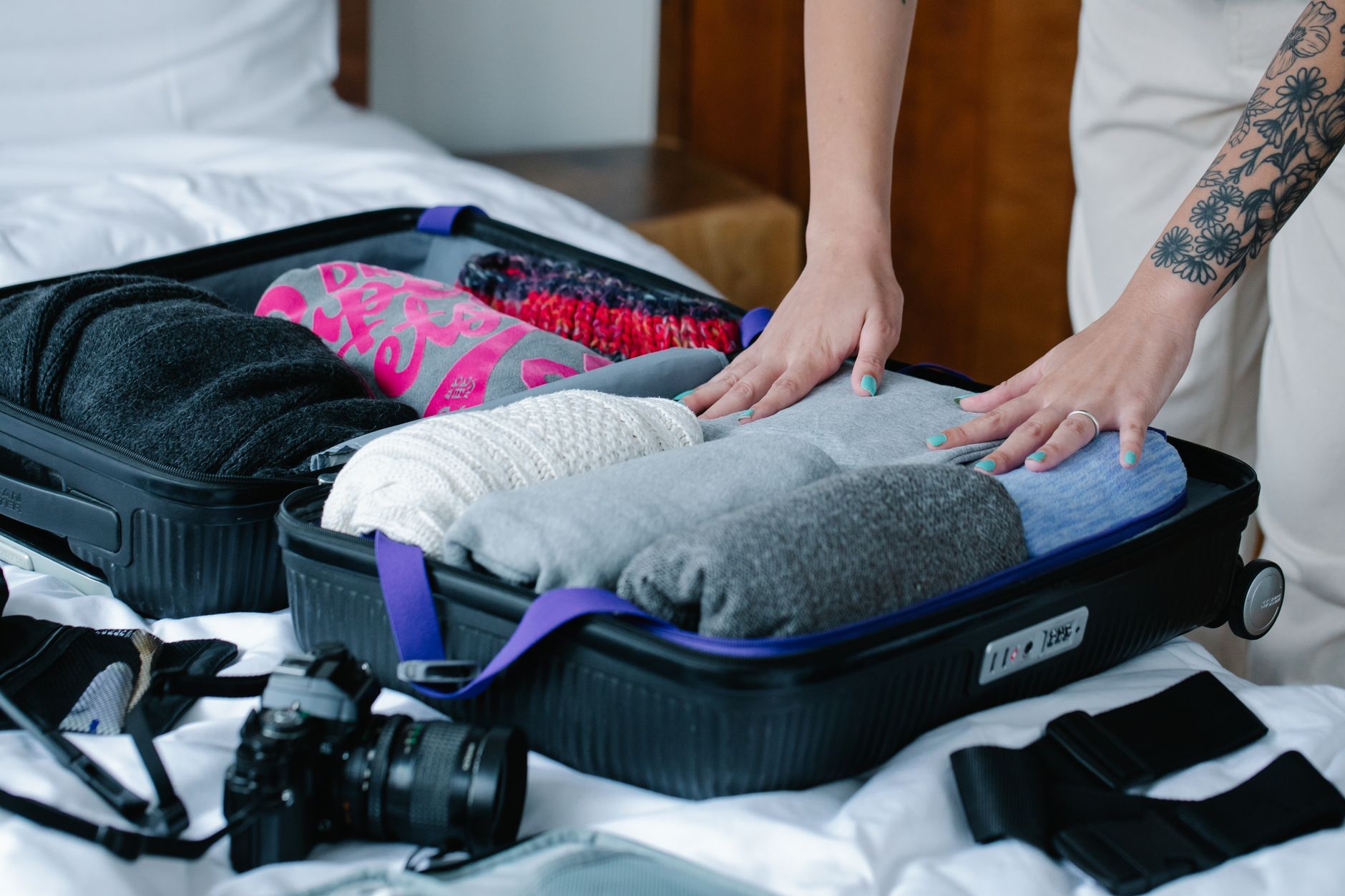
The trick to traveling with a trench is treating it as your outer layer for the entire trip. Wear it on the plane to save luggage space, then use it as a blanket once you're in your seat. Roll it loosely rather than folding it flat—this prevents hard creases along the sleeves.
In practice, trench coat travel means building a capsule wardrobe that works underneath it. Stick to slim-cut trousers, straight-leg jeans, and simple knits. The trench provides enough visual interest that everything else can be quiet. A white shirt, black trousers, good boots, and a trench will carry you through most European cities without looking like you're wearing a uniform.
One last note: ignore the belt if you prefer. The trench works just as well worn open, especially over wider trousers or when you want a more relaxed silhouette. The belt is useful for windy days and creating shape, but it's not mandatory. The coat itself does most of the work.
Travel light, but not so light that you're caught in a downpour wearing linen. The trench splits the difference.