The Truth About Linen: Why It Wrinkles and How to Wear It Well
Understanding the fabric's construction explains everything—from its creases to why it remains the most civilised choice for warm-weather travel.

The Truth About Linen: Why It Wrinkles and How to Wear It Well
Linen's reputation precedes it: beautiful in theory, crumpled in practice, supposedly impossible to pack. Yet walk through any European coastal town in August and you'll notice the most elegantly dressed travellers are wearing it, wrinkles and all.
Why Linen Behaves the Way It Does
The wrinkle issue isn't a flaw—it's structural. Linen comes from flax fibres, which lack the elasticity of cotton or wool. Under a microscope, these fibres are smooth and straight, with little natural crimp. When you sit, fold, or pack linen fabric travel wear, those fibres bend and stay bent. The upside? This same rigidity creates the fabric's signature drape and allows air to circulate freely, which is precisely why it remains unmatched in heat.
Quality matters enormously here. Fine Irish and Belgian linens—still woven in mills with century-old expertise—use longer fibres that produce a smoother, more lustrous cloth. These premium weights (look for anything above 180gsm) wrinkle less aggressively than lightweight versions and hold their shape better through wear. The Armani approach to linen, for instance, often involves a tighter weave and occasional silk or wool blending that softens the fabric's tendency to crease at stress points.
Meanwhile, 120 Lino has built its entire brand around mid-weight Italian linen that's been pre-washed and enzyme-treated, giving it a lived-in texture from the first wear. The wrinkles still appear, but they read as intentional rather than neglectful.
The Wrinkle Question: Acceptance vs. Management
Here's the uncomfortable truth: you cannot stop linen from wrinkling. But you can control how it wrinkles.
Strategies that actually work:
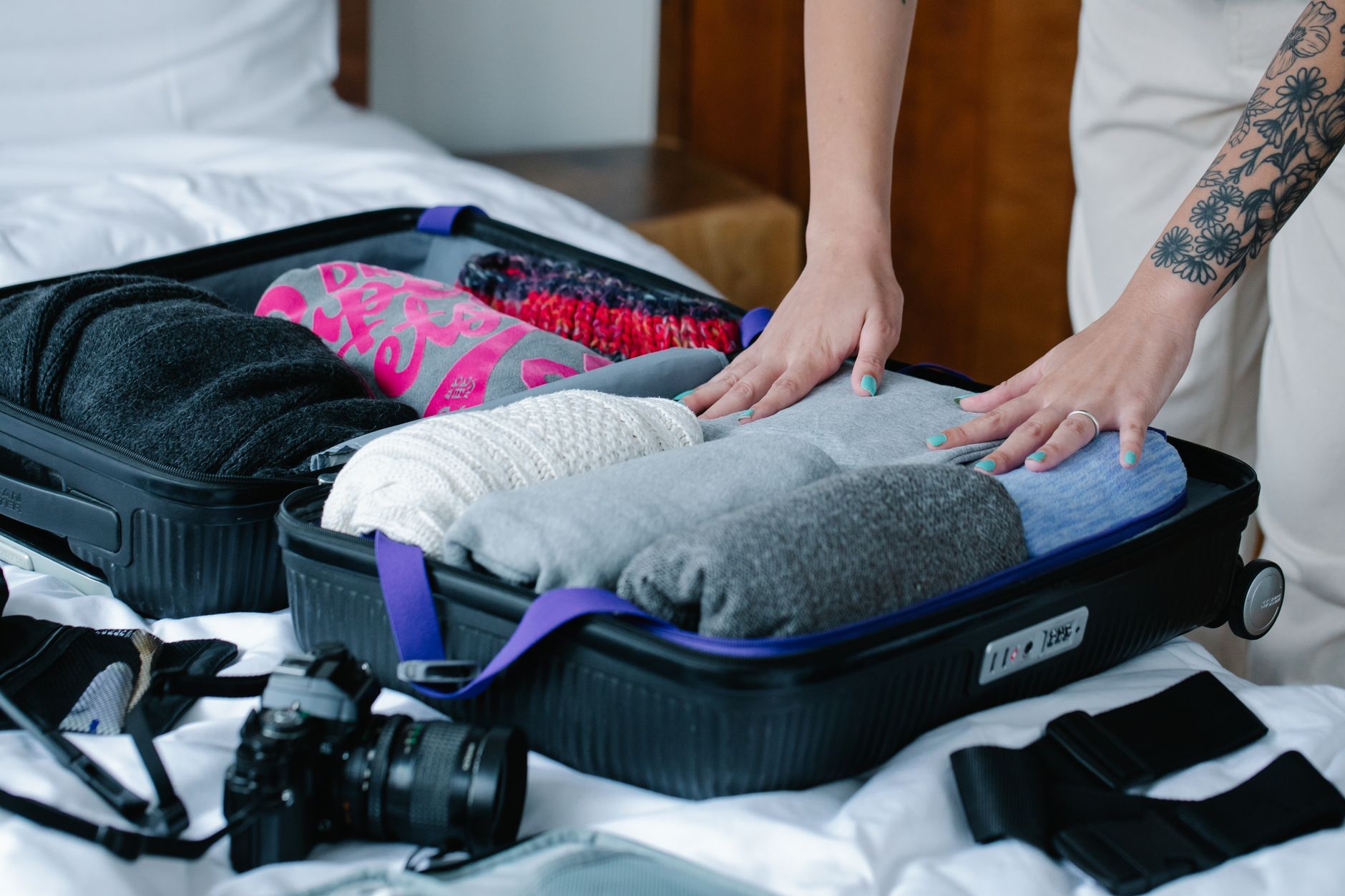
- Roll, don't fold when packing. Tight rolls create fewer hard creases than flat folds.
- Steam immediately upon arrival, while hanging in a bathroom during a hot shower if you lack a steamer.
- Wear it damp. Linen dries quickly and will conform to your body, setting in soft, natural creases rather than chaotic ones.
- Choose darker colours and prints. Navy, charcoal, and olive show wrinkles far less than white or pale neutrals.
- Accept the crumple in casual pieces, resist it in tailoring. A rumpled linen shirt reads as relaxed; a crumpled blazer just looks untended.
The myth that you should never sit in linen is precisely that. The fabric is designed to be worn and lived in. What separates polished from dishevelled is how much wrinkling you permit before addressing it.
Styling Linen for Warm-Climate Travel
The secret to looking intentional rather than merely hot lies in contrast and structure. Linen fabric travel wear works best when you're not dressed head-to-toe in it.
For men, a linen shirt gains crispness when paired with cotton or wool trousers. Loro Piana's linen-silk shirts, for example, are designed to be worn with their cotton-stretch chinos, not with matching linen drawstring pants (unless you're consciously leaning into resort wear). Add leather shoes rather than espadrilles, and suddenly the whole effect sharpens.
Women have more latitude. A linen slip dress can anchor an entire warm-weather wardrobe, particularly in a saturated colour that camouflages creasing. Layer it with a structured leather bag and minimal jewellery—the textural contrast does the work. Alternatively, treat linen as the relaxed element: a rumpled blazer over a fitted silk camisole and tailored cotton shorts feels studied, not accidental.
For both, outerwear is key. A linen jacket should be unlined (the lining defeats the breathability) and cut with enough ease through the shoulders that it doesn't strain when you move. Stiffness creates more wrinkles. Fluidity works with them.
Caring for Linen on the Road
Most linen fabric travel wear improves with washing, not dry cleaning. The fibres soften and develop character. Wash in cool water, air dry, and press while still slightly damp if you want crisp results. For travel, a small bottle of wrinkle-release spray and a portable steamer (the Steamery Cirrus 3 is genuinely worth the luggage space) will see you through a fortnight.
One last note: vintage and deadstock linen often outperforms new. Pre-1990s European linen was typically heavier and more tightly woven. If you find a piece at a market in Puglia or a dépôt-vente in the Marais, it's likely superior to most contemporary offerings at three times the price.
Linen doesn't ask for perfection. It asks for understanding, a bit of care, and the confidence to wear it as it's meant to be worn—which is to say, with a few well-placed creases and no apologies.