Time Zones: How a Swiss Watch Shapes Your Entire Travel Wardrobe
The right timepiece doesn't just tell time across continents. It sets the tone for every styling decision you make before you even pack.

The Anchor Principle
A Swiss watch is rarely the loudest thing you're wearing, yet it dictates more than you think. While a handbag can stay in the hotel safe and shoes get swapped twice daily, your watch remains constant—which makes it the gravitational centre of any travel wardrobe. The case size, metal tone, dial colour, and strap material quietly steer every other choice, from the weight of your linen shirt to whether you reach for gold jewellery or silver. This isn't about matching metals like a rigid stylist from 1987. It's about coherence.
Consider the Rolex Datejust in steel and white gold. Its Jubilee bracelet has a certain gleam—not flashy, but present—that works beautifully with cooler tones and structured tailoring. Pack charcoal trousers, navy knits, crisp white shirting. The watch becomes the through-line. Swap in a Jaeger-LeCoultre Reverso with a black alligator strap, and suddenly you're drawn toward softer textures: unlined blazers, suede loafers, perhaps a cashmere scarf in taupe. Same destination, entirely different aesthetic.
Watch Styling Fashion for the Frequent Flyer
The best travel watches are those that transition without fuss. A GMT complication is practical, yes, but it's the visual flexibility that matters more. When you're moving between a breakfast meeting in Zurich and an evening aperitivo in Como, you need a watch that doesn't force a wardrobe change.
Key considerations for watch styling fashion on the road:
- Case diameter and wrist presence: Oversized sport watches (think 42mm and up) pair naturally with relaxed tailoring and knitwear but can look cartoonish under a formal shirt cuff. Aim for 38–40mm if your trip includes business dinners.
- Strap versatility: A steel bracelet is bombproof and works across contexts. Leather requires more care but offers warmth. NATO straps signal weekend mode—fine for Positano, less so for the Hôtel de Crillon.
- Dial legibility and colour: Black dials are safe. Blue dials are having a moment but skew casual. White or silver dials feel dressier and photograph well in natural light, which matters if you're documenting your trip.
- Metal tone consistency: If your watch is rose gold, your belt buckle, ring, and sunglasses frames should nod in the same direction. Not identical, just sympathetic.
This isn't about rules. It's about reducing friction. When your watch already works with your aesthetic baseline, you pack less and wear more.
The Wardrobe Edit, Reverse-Engineered
Here's where watch styling fashion becomes genuinely useful: start with the watch, then build outward. If you're travelling with a Cartier Santos—angular, assertive, unmistakably French—you're not reaching for rumpled linen and espadrilles. The Santos wants structure. A crisp cotton poplin shirt, tailored chinos in stone or navy, leather sneakers or loafers with a slim profile. The watch's geometric case echoes in your silhouette: clean lines, intentional proportions.
Or take the Omega Speedmaster, still the most versatile sport-luxury watch in production. It's at home with a leather jacket and jeans, but it also slips under a dress shirt for dinner without looking out of place. That chameleon quality makes it ideal for a long weekend where your itinerary is half-planned and your mood shifts. Pack around the Speedmaster and you'll find yourself choosing pieces that are similarly unfussy—block-colour knitwear, unstructured blazers, good denim.
The watch becomes a filter. Does this shirt work with the Santos? Does this jacket make sense next to the Speedmaster? If the answer is no, leave it at home.
The Long Game
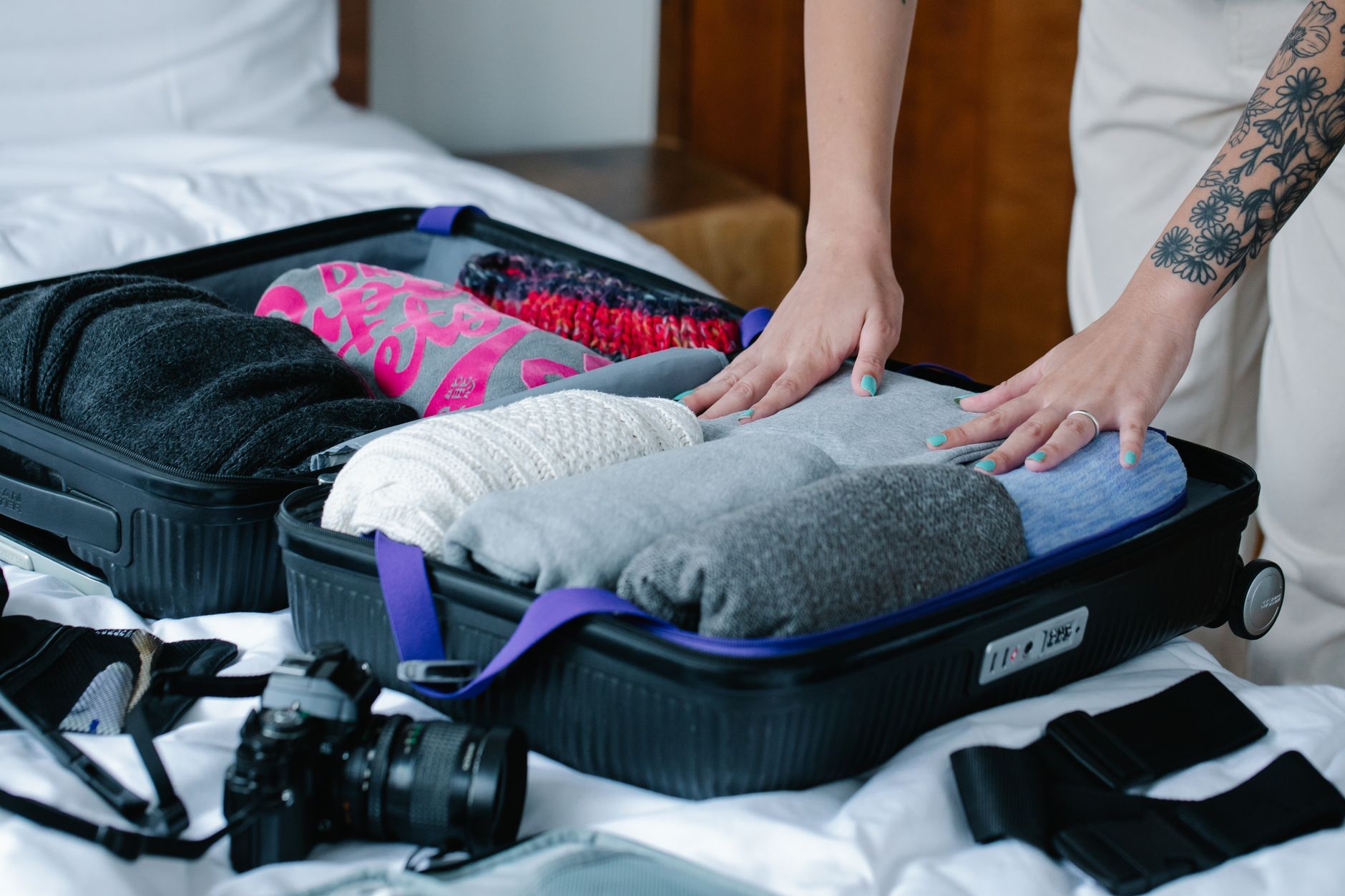
Watch styling fashion isn't a trend cycle. A well-chosen Swiss watch outlasts the wardrobe it anchors, which means your aesthetic can evolve around a fixed point. You'll replace the trousers, update the outerwear, experiment with silhouettes—but the watch remains, accumulating patina and continuity. That's the appeal. It's not about freezing your style in place. It's about having a reliable reference point when you're standing in front of an open suitcase at 6 a.m., wondering what actually works.
The watches that do this best are the ones that don't try too hard. No limited editions with cartoon dials, no over-complicated bezels, no aggressive branding. Just solid proportions, legible design, and the kind of build quality that justifies the investment. When that's on your wrist, everything else gets easier.